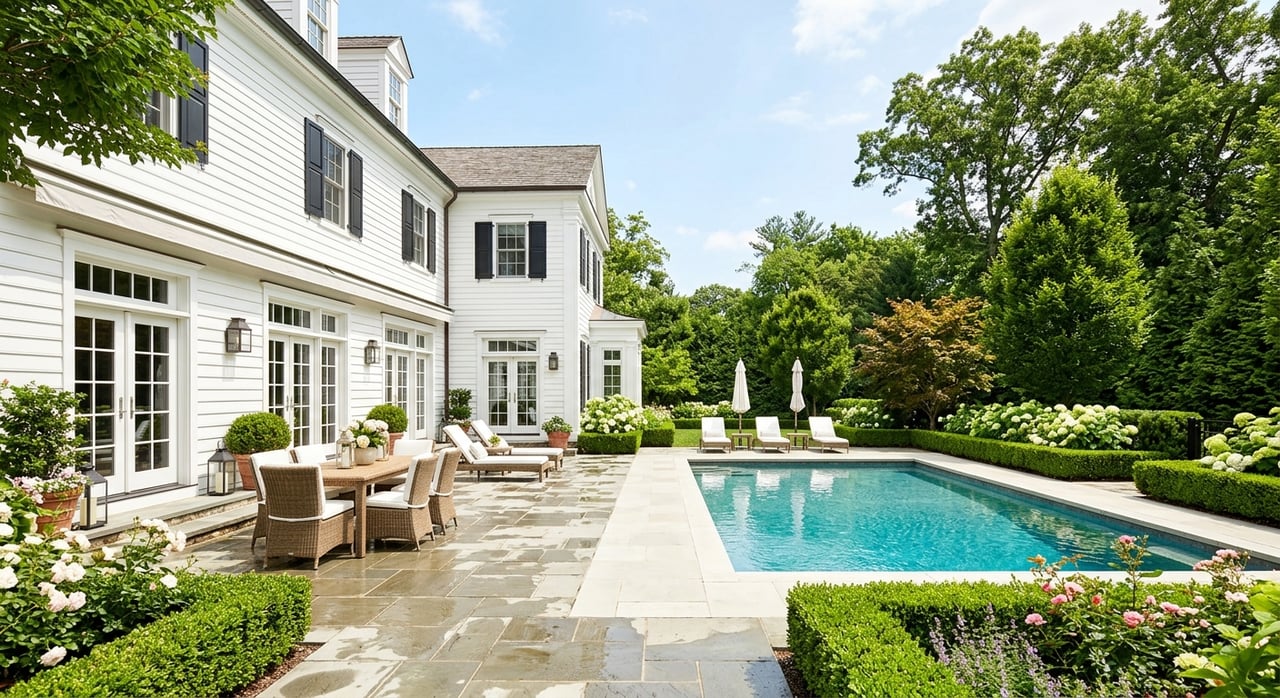
Privacy can be a priority, not a compromise, when you sell a Greenwich estate. If you own a waterfront property or a backcountry residence, you may want strong pricing and qualified buyer interest without broadcasting your move to the public. The good news is that Greenwich gives sellers real options for a controlled launch, and the local market data supports a thoughtful, privacy-first strategy. Let’s dive in.
Why discretion can work in Greenwich
Greenwich remains a high-value market with relatively tight single-family inventory. According to the Greenwich Realtors market update, the 2025 median single-family sale price reached $3.15 million, and 57% of residential homes sold on the Greenwich MLS sold at or above list price. In Q1 2026, the median single-family sale price rose to $3.831 million, while active inventory in March 2026 dropped to 89 homes.
For you as a seller, that matters because a discreet launch does not automatically signal weak demand. In a market with limited inventory and strong pricing, privacy-first marketing can be positioned as a controlled entry designed to protect your time, security, and negotiating leverage.
Waterfront and backcountry need different plans
Not every Greenwich luxury property should be marketed the same way. A waterfront estate and a backcountry residence attract different buyers, raise different diligence questions, and often require different prep before the first private showing.
Waterfront sales involve more variables
Greenwich has 27 miles of shoreline, 30 islands, and 8 harbors. That setting is a major draw, but it also means buyers may look closely at flood-zone issues, storm exposure, waterfront access, docks, and moorings.
The town’s coastal planning materials focus on flooding, coastal storm damage, and sea-level-rise impacts. If your property includes or relies on boating access, details around moorings can matter too. Greenwich notes that some moorings, including Great Captain’s Island moorings, may involve long waiting periods, while waterfront-property moorings require annual permits, liability insurance, and approved placement.
Backcountry sales center on land and privacy
Backcountry estates present a different value story. In District 10, the town describes the area as largely wooded and residential, with 4-acre zoning north of the Merritt Parkway and 2-acre zoning south of it.
That context helps explain why buyers often focus on acreage, seclusion, topography, and long-term land use. The presence of places like the 300-acre Babcock Preserve also reinforces how much privacy and a wooded setting can shape perceived value in this part of Greenwich.
What discreet marketing actually means
If you want privacy, the first step is understanding what options are available. In Greenwich, discreet selling is not a vague concept. It has clear practical and MLS-related definitions.
Office exclusive options
Under Greenwich MLS rules, a seller may refuse full dissemination of a listing. In that case, a broker may take an office exclusive that is filed with the MLS but not disseminated to participants.
For you, this can allow early buyer testing and selective outreach without placing the property into broad public view. It can be useful when privacy, security, or timing is more important than immediate mass exposure.
MLS listings with Internet controls
There is also a middle-ground option. The Greenwich MLS consumer guide explains that a seller may withhold a listing from the MLS, and MLS rules also allow a seller to withhold the listing or even the property address from Internet display.
That can create a more controlled public presence. It also helps protect sensitive details, since confidential fields like showing instructions and property-security information may not be displayed in IDX.
Public marketing changes the rules quickly
This is one of the most important points for estate sellers to understand. Once a property is publicly marketed, the listing broker must submit it to the MLS within one business day under Greenwich MLS rules.
Public marketing is defined broadly. It can include yard signs, flyers, public websites, IDX or VOW displays, email blasts, public apps, and multi-brokerage listing-sharing networks. That means your privacy decision should be made early, before assets and outreach are created.
Decide privacy strategy before photography
For high-value properties, photos, floor plans, and staging decisions often happen early. But if discretion is important, it makes sense to decide how public you want to be before creating materials that may trigger a wider launch.
Greenwich requires at least seven unique photos for a listed property, and virtually staged images must be labeled and paired with a true photo under its MLS rules. If your goal is to keep visibility limited at first, your marketing plan, image strategy, and distribution plan should all be aligned from day one.
Build a confidential valuation first
A discreet sale should still start with pricing discipline. You do not need to go public to begin forming a supportable valuation.
Greenwich’s Assessor’s Office maintains property discovery, listing, and valuation records, and property record cards are available through the town. The Town Clerk also states that land records are recorded daily and digitized back to the 1920s. Together, those public records make it possible to build a confidential value analysis before your home ever appears on the market.
That is especially important for estates, where pricing often depends on more than square footage. Waterfront rights, acreage, setting, permit history, and comparable transfers can all influence strategy.
Prepare the property without overexposing it
Private marketing does not mean minimal preparation. In many cases, the opposite is true. A selective launch works best when the home is fully ready for serious buyers.
According to the National Association of Realtors 2025 staging report, 29% of agents said staging produced a 1% to 10% increase in offered value, and 49% said it reduced time on market. Decluttering, cleaning, and curb appeal were among the most common recommendations.
For a Greenwich estate, that does not always mean turning the home into a photo-heavy showcase. It often means refining presentation so that each private showing feels intentional, polished, and easy for a qualified buyer to understand.
Check permits and property details early
One of the biggest risks in a luxury sale is finding out late that an improvement, waterfront feature, or site condition needs extra review. Early diligence can reduce avoidable delays and help you answer buyer questions with confidence.
Waterfront diligence items
If your property is on or near the water, buyers may ask about flood-zone status, waterfront improvements, permits, and access. Greenwich’s Inland Wetlands and Watercourses Agency reviews development within and adjacent to inland wetlands and watercourses, and the town’s zoning code requires permits for development in special flood hazard areas.
If there is a dock, mooring, or other marine access component, it is wise to review the current status early. Details like annual permits, insurance requirements, and approved placement can affect how a buyer evaluates both value and timeline.
Backcountry diligence items
For backcountry properties, questions often center on lot constraints, zoning, prior alterations, and future use potential. In a wooded or multi-acre setting, buyers may pay close attention to site access, wetlands adjacency, and the permit history for additions, guest structures, pools, or other improvements.
A discreet sale tends to go more smoothly when these items are organized before confidential tours begin. That helps you avoid scrambling once a serious buyer starts diligence.
Curated exposure can still reach strong buyers
Many sellers assume that privacy means giving up reach. In Greenwich, that is not necessarily true.
The Greenwich MLS sellers guide notes that seller exposure reaches more than 1,200 sales professionals across 200-plus local offices. For a discreet listing, that supports a more selective path where qualified buyers can still be reached through professional channels rather than broad public advertising.
International demand is another factor worth noting. The National Association of Realtors reported that foreign buyers purchased $56 billion of U.S. existing homes from April 2024 through March 2025, and New York ranked among the top destination states. For certain Greenwich estates, carefully targeted domestic and international outreach may be appropriate without making the property widely visible online.
When discreet selling makes sense
A private or controlled launch can be a smart fit if you want to:
- Protect your household’s privacy and schedule
- Avoid casual traffic and limit showings to qualified buyers
- Test pricing and buyer response before a broader launch
- Coordinate a sale around relocation, family planning, or business timing
- Reduce public visibility for a high-profile property or owner
It can also work well if your home needs a little more preparation before full exposure. A staged rollout gives you flexibility while preserving future options.
What a smart private launch looks like
In practical terms, a strong discreet sale often follows a simple sequence:
- Confidential valuation: Review public records, comparable sales, and property-specific factors.
- Early diligence: Check permits, wetlands or flood-related issues, and any waterfront or site-specific details.
- Property prep: Handle decluttering, cleaning, light staging, and presentation improvements.
- Privacy decision: Choose between office-exclusive, limited-display, or broader MLS exposure.
- Curated outreach: Share the opportunity with qualified buyers and trusted professional channels.
- Evaluate response: Measure showing quality, pricing feedback, and timing before deciding on the next step.
This approach gives you more control over how your property enters the market and how your sale story is told.
If you are considering a confidential sale in Greenwich, Dannel Malloy can help you evaluate pricing, exposure options, and next steps with a discreet, hands-on approach.
FAQs
Can I keep my Greenwich estate off the public market and still test demand?
- Yes. Greenwich MLS rules allow sellers to refuse dissemination, which can support an office-exclusive or otherwise limited exposure strategy before a broader public launch.
What is the difference between an office exclusive and a standard Greenwich listing?
- An office exclusive can be filed with the MLS without being disseminated to participants, while a standard listing is typically entered for broader MLS cooperation and may appear publicly depending on the seller’s display choices.
How do waterfront issues affect a Greenwich sale?
- Waterfront sales may involve added buyer questions about flood zones, storm exposure, permits, docks, moorings, insurance-related considerations, and access, all of which can influence value and timing.
What should I review before privately showing a backcountry estate in Greenwich?
- You should review pricing support, zoning context, permit history, wetlands or site-related issues, and the overall presentation of the home so qualified buyers receive clear, organized information.
Can a discreet Greenwich sale still reach international buyers?
- Yes. Professional networks and curated marketing channels can help target qualified domestic and international buyers without relying on broad public visibility.