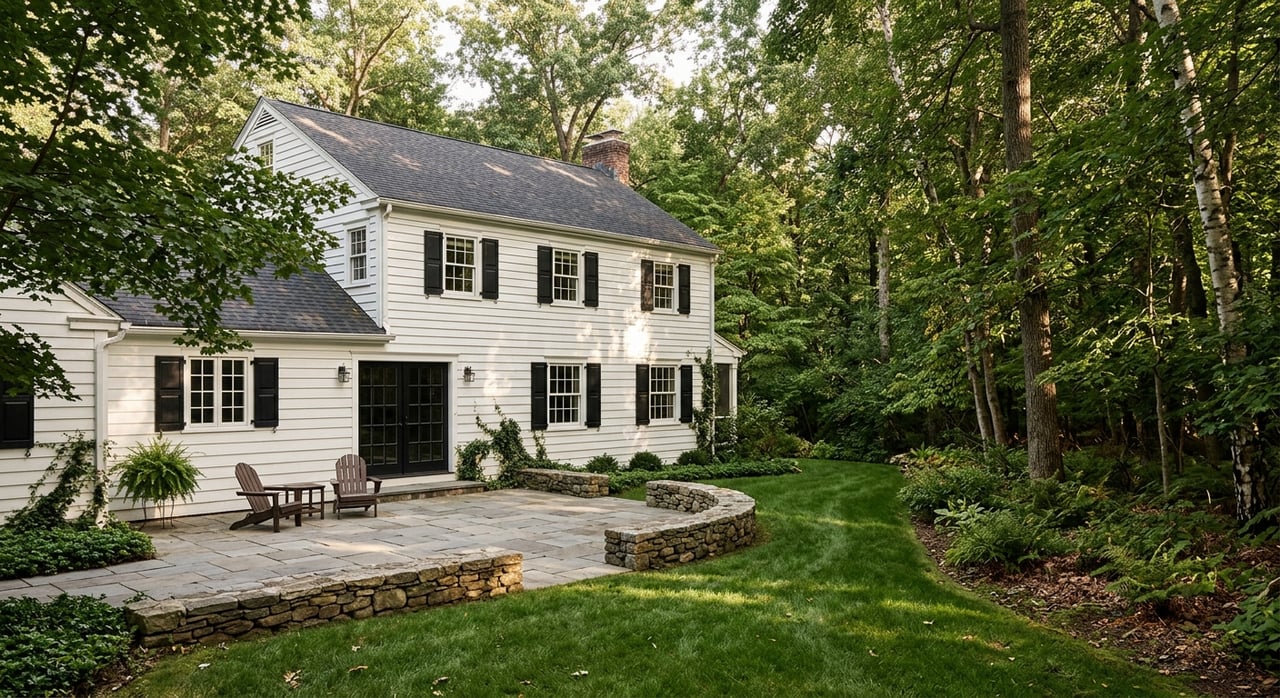
What matters more to you in Wilton: a quiet, buffered setting or an easier daily trip to Stamford or New York City? For many buyers, that answer is not simple. Wilton offers both privacy and commute access, but usually not in the same way or to the same degree. If you are trying to balance seclusion with convenience, this guide will help you narrow your search and ask better questions before you tour homes. Let’s dive in.
Why Wilton Feels Different
Wilton’s landscape plays a big role in how homes live day to day. The town describes itself as a residential community shaped by wooded back roads, rolling hills, open space, and limited land left for development. It has also preserved nearly 1,000 acres of open space, which helps explain why many parts of town feel tucked away and private.
That matters because privacy in Wilton is not just about buying more acreage. In many cases, it is also about where the property sits in relation to busier roads, station areas, and the town’s main commercial corridors. A home with a long driveway, interior road access, and wooded buffers may feel more secluded than its lot size alone suggests.
Privacy Means More Than Lot Size
If privacy is your top priority, start with the land pattern behind the listing. Wilton’s residential zoning helps explain why certain neighborhoods feel more spacious even before you step inside a house. In the R-2A district, the minimum lot size is 2 acres with 200 feet of frontage, while the R-1A district requires 1 acre with 150 feet of frontage.
Setbacks also shape how much breathing room you feel. R-2A requires 50-foot front yards, 40-foot side yards, and 50-foot rear yards. R-1A requires 40-foot front yards, 30-foot side yards, and 40-foot rear yards. Those standards create a built-in sense of separation in many single-family areas.
Still, lot size is only one part of the picture. In Wilton, wooded edges, topography, and road placement can matter just as much. A one-acre property with strong natural buffering may feel more private than a larger parcel closer to a more traveled route.
Features That Often Support Privacy
When you review listings, pay attention to details like these:
- Longer driveways
- Interior or hill-road locations
- Wooded buffers around the house
- Distance from Route 7 and other main roads
- House placement set back from the street
- Natural grade changes from hills or rolling terrain
These features often do more to shape day-to-day privacy than a headline lot number alone.
Commute Access Starts With Location
Wilton also appeals to buyers who need practical regional access. The town says it offers easy access to the Merritt Parkway and Interstate 95, along with two train stations with free parking. For many households, that makes Wilton a realistic option for commuting while still living in a lower-density setting.
The current Danbury Branch schedule includes both Wilton and Cannondale stations. The line also connects to places like South Norwalk, Stamford, and Grand Central. That means your commute calculation is often less about whether rail exists and more about which station you will use, what departure time fits your schedule, and how much station access matters to you.
Wilton Center planning materials identify Danbury Road, also known as Route 7, as the town’s main north-south corridor. Homes nearer that spine often offer easier driving convenience, but they may come with less of the quiet, tucked-away feeling that privacy-focused buyers want.
A Real-World Commute Example
One southbound train on the current schedule leaves Wilton at 8:06 a.m., arrives in Stamford at 8:51 a.m., and reaches Grand Central at 9:48 a.m. That is a useful illustration of the tradeoff. Stamford is materially closer by rail, while Manhattan requires more time and more attention to departure timing.
If your work life centers on Stamford, you may be able to lean a bit more toward privacy. If your routine depends on New York City, station access and train timing may need to move much higher on your priority list.
Wilton’s Main Tradeoff
The core decision in Wilton is usually this: the more interior and wooded the setting, the more likely you are to give up some commute convenience. On the other hand, the closer you move toward the center, Route 7, or station areas, the easier your daily logistics may become.
That does not mean one option is better than the other. It simply means you will get the best result when you define your non-negotiables early. Buyers who do this well tend to avoid touring homes that look right online but do not fit how they actually live.
Micro-Areas to Compare
Wilton Center Convenience
Wilton Center is the town’s clearest convenience hub. Planning materials describe the area south of Ridgefield Road and west of the railroad tracks as a mixed-use center intended for improved pedestrian circulation and additional residential infill.
For buyers, that usually means stronger walkability and easier station convenience. It can be a smart fit if you want quicker access to daily errands or rail service. It is generally less aligned, though, with a privacy-first search.
Cannondale Compromise
Cannondale often stands out as a middle-ground option. It is included in Wilton’s village-district framework, and the town also identifies Cannondale as one of its National Register historic districts. It also has an active station on the Danbury Branch.
That combination makes Cannondale appealing if you want some rail access without moving all the way into the town’s most convenience-driven area. Depending on the specific property, you may find a better balance between character, access, and a less compact setting.
Georgetown And Interior Roads
Georgetown and Wilton’s hill-road interior areas are worth a close look if your first goal is seclusion. Wilton’s historic-district materials identify Georgetown as Historic District #6, and the town history points to early settlement patterns along roads such as Belden Hill, Chestnut Hill, and Ridgefield Road.
These parts of town connect closely to Wilton’s wooded, rolling, back-road identity. For many buyers, they are where the privacy story becomes most compelling. The tradeoff is that as the setting becomes more interior, convenience often becomes less immediate.
Housing Styles Add Another Layer
Wilton is not uniform in housing stock, and that matters when you search for the right privacy-commute balance. The town history notes that many 18th- and 19th-century homes remain, while postwar builder subdivisions also changed the landscape after World War II. Zoning then helped guide growth in a more controlled way.
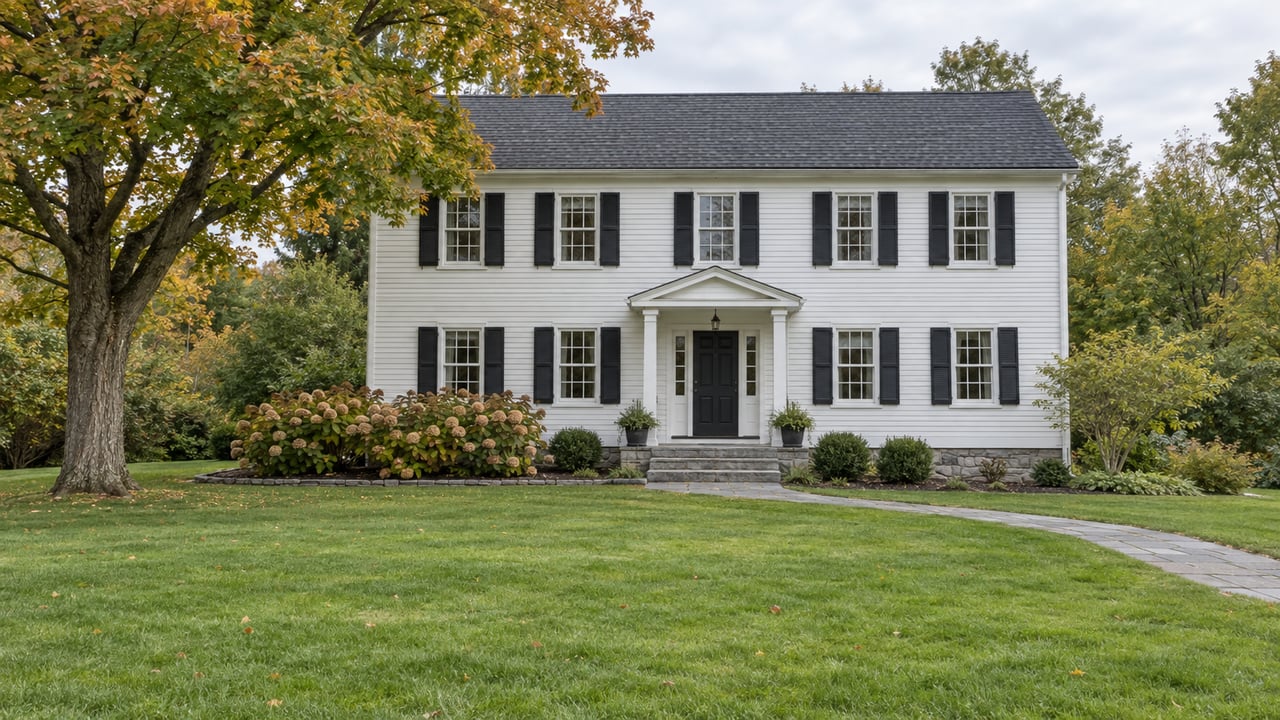
In practice, that means you may see older colonials, postwar neighborhood homes, and larger-lot properties all within the same broader market. Some buyers will prefer the character and setting of an older home on a more established road. Others may value a simpler commute pattern or a more straightforward lot layout.
Questions To Ask Before You Tour
A focused search starts with a few practical questions. If you answer them honestly, you can sort listings faster and waste less time.
Ask yourself:
- Do you want a true 1-acre or 2-acre lot, or do you mainly want wooded separation?
- Is your commute centered on Stamford, New York City, or a mix of both?
- Are you comfortable with a short drive to the station, or do you want closer station access?
- Do you prefer Wilton Center or Cannondale convenience, or are you aiming for interior-road privacy?
- Are you considering a property in a historic district or village district?
These questions shape your search more than broad price filters alone.
Don’t Overlook Review Requirements
If you are drawn to one of Wilton’s character-rich areas, check whether the property falls within a historic district or village district. In local historic districts, visible alterations, restoration, moving, or new construction may require a Certificate of Appropriateness. In applicable village-district areas, new construction and significant exterior alterations are also reviewed.
This does not mean you should avoid those homes. It simply means you should understand the approval framework before you make plans for future exterior changes. For buyers who value architectural character, this is often part of the tradeoff.
How To Balance Privacy And Commute
The best Wilton search usually starts with your weekday routine, not just your wish list. If you commute to Stamford several times a week, you may have more flexibility to prioritize land, buffers, and a more interior setting. If you need regular New York City access, you may want to be more disciplined about station convenience and route efficiency.
From there, compare properties based on how they feel in real life. Look at drive time to the station, the road approach to the home, the amount of tree cover, and the location of neighboring houses. In Wilton, those practical details often determine whether a home truly fits your goals.
If you want help narrowing Wilton options with privacy, commute time, and long-term fit in mind, Dannel Malloy can help you search with a clear strategy and discreet, hands-on guidance.
FAQs
What does privacy usually mean when buying a home in Wilton?
- In Wilton, privacy often means a combination of lot size, wooded buffers, longer driveways, interior-road placement, and distance from busier corridors like Route 7.
How important is station proximity for a Wilton buyer commuting to New York City?
- It can be very important because the Danbury Branch ride to Grand Central is meaningfully longer than the ride to Stamford, so station access and departure timing can have a bigger impact on your routine.
Which Wilton areas are most convenient for commuting?
- Wilton Center is generally the town’s strongest convenience hub for walkability and station access, while Cannondale can offer a middle-ground option with rail access and a less central setting.
Which Wilton areas may appeal more to privacy-focused buyers?
- Georgetown and more interior hill-road areas often appeal to buyers who want wooded surroundings, rolling terrain, and a more secluded setting.
What should buyers know about Wilton lot sizes and spacing?
- Wilton’s residential districts include areas with 1-acre and 2-acre minimums, along with setback requirements that help create more spacing between homes in many single-family neighborhoods.
Do historic district or village district rules matter when buying in Wilton?
- Yes. In applicable areas, certain exterior changes, new construction, or visible alterations may be subject to local review, so it is smart to understand those requirements early in the process.