The Connecticut Bar Association's model residential contract sets one deadline that carries more weight than most buyers expect. It falls at 5:00 p.m. on the "Mortgage Contingency Date." If a buyer can't get a written loan commitment, the buyer has to deliver written notice of that to the seller, the seller's attorney or the seller's broker before that hour. When the notice arrives on time, the agreement is void and the buyer is "entitled to the immediate return of all sums paid." When it doesn't, the contingency "shall be deemed satisfied," and the deal stays in force.
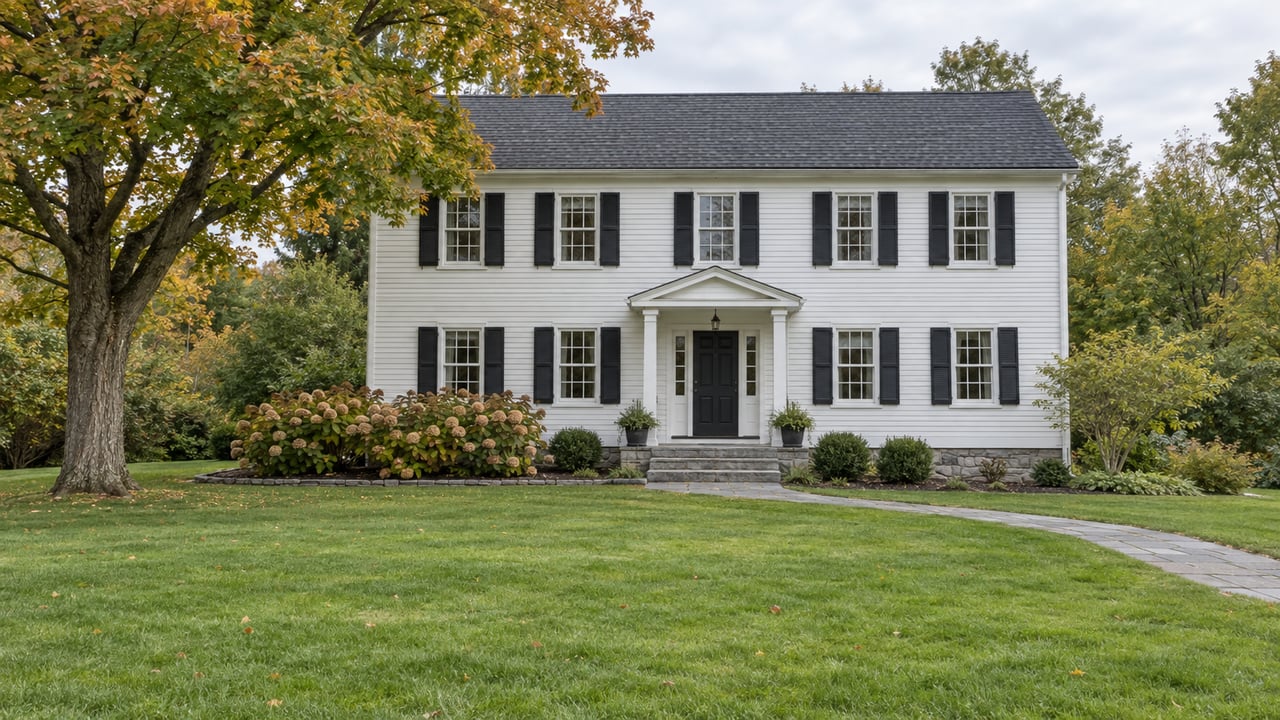
In Riverside this fall, many buyers never reach that deadline because they signed contracts without the clause. Riverside closed 47 single-family sales in the first nine months of 2026. The median time on market was 11 days, buyers paid an average of 108.5% of list price, and contingent contracts were rare, according to the Greenwich Beacon. So for a financed buyer, the price of a Riverside house now includes the deposit they're prepared to lose if the lender says no.
How the deposit gets to the table
Connecticut purchases usually happen in two steps. A Connecticut attorney's explainer describes the common sequence. It starts with a written binder or offer, often backed by a 1% binder deposit. Next comes a formal contract, drafted by the seller's attorney and reviewed by the buyer's attorney, with a deposit that is typically 10% of the purchase price. In Fairfield County, an unsigned information sheet sometimes stands in for the binder. Whether a binder itself binds the parties depends on its wording and on local custom, as a Fairfield County attorney's note on binders explains.
The CBA model agreement doesn't fix a deposit percentage. It provides for an initial deposit when the contract is signed and lets the parties schedule an additional deposit for a later date. It takes effect on the last party's signature, and the attorney-review window is five business days unless the parties write in more time. Once the contract is signed, three provisions decide what happens to that money.
- Section 5 and Section 14, the mortgage contingency. The contract is contingent on financing only if the financing terms in Section 5 are filled in. The commitment deadline is left as a blank number of days that the parties choose, so there's no statewide standard. The buyer must apply promptly and pursue the loan "with diligence."
- The seller's five-day window. Even after a missed deadline makes the contingency count as satisfied, the seller has five days to terminate because the buyer couldn't get a commitment. If the buyer applies for a different type of mortgage than the one specified, the seller gets five calendar days from the buyer's notice to terminate.
- Section 24, default. If the buyer defaults, the seller's sole remedy is to terminate and keep "all deposit funds paid or to be paid" as liquidated damages.
Without Section 14, a buyer whose loan falls through and who can't close is left with only Section 24. The deposit that made the offer competitive becomes the seller's compensation.
This describes how the model form works. Any actual Riverside contract may change it, so the buyer's own attorney and lender are the right people to confirm what a specific agreement allows. This post is general information and not legal or financial advice.
Why Riverside sellers can ask for this
Riverside homes sold faster and further over asking than Greenwich homes overall.
| Measure | Riverside, Jan–Sep 2026 | Greenwich town-wide |
|---|---|---|
| Single-family sales | 47, up seven from 2025 | 150 closings in Q3 2026, down 6.8% |
| Median time on market | 11 days | 17 days median, Jan–Sep 2026 |
| Price relative to list | 108.5% on average | 104.9% in September 2026 |
| Contingent contracts | Rare | Not reported town-wide |
Riverside's average sale ratio was the highest in Greenwich through September, the Greenwich Beacon reported. That same article summarized a local neighborhood market column on what Riverside buyers face. Buyers who don't have cash and give up the mortgage contingency need a backstop if the lender declines, or the 10% deposit is gone.
A seller choosing among several offers above asking will look closely at which ones can fail. Section 14 is the most common way a signed Connecticut contract unwinds with the buyer's money returned. An offer without it gives the seller more certainty, and Riverside's figures show sellers there have been able to get that certainty.
The money at stake, worked through
Take Greenwich's September 2026 single-family median of $2,942,500 as an illustration. At 10%, the contract deposit is $294,250. Under Section 24, that is the amount at risk if a buyer without a financing contingency can't close.
The appraisal is a second exposure, and the over-ask premium is what drives it. The CBA form includes an optional appraisal condition, which requires an appraisal at least equal to the purchase price. Consider a hypothetical Riverside house listed at $3,000,000 that sells at the neighborhood's 108.5% average. It closes at $3,255,000, which is $255,000 above list. If the appraisal comes in near the list price and the buyer dropped the appraisal condition, the lender sizes the loan to the lower number. The buyer then needs that difference in cash on top of the planned down payment, or faces the same default question Section 24 answers.
Put together, a financed Riverside buyer who waives both conditions is committing the deposit plus enough reserves to cover an appraisal shortfall. On the illustration above, that could be well over half a million dollars beyond the down payment.
Financing got more expensive this year
The cost of borrowing went up while Riverside sellers were favoring offers that don't rely on a loan. Freddie Mac's Primary Mortgage Market Survey put the 30-year fixed-rate average at 7.40% as of October 8, 2026, up from 7.28% the week before and from 6.30% a year earlier. At higher rates, a loan approved in principle is more exposed to small changes in income documentation, debt ratios or appraised value. Those are the things a mortgage contingency is meant to absorb.
A year ago, the gap between a contingent offer and a non-contingent one came down mostly to how confident the buyer was. With rates more than a full point higher, the same choice can involve a real chance that underwriting falls short of the purchase price, and the deposit is what's exposed.
New supply is limited
Riverside's competition stays concentrated partly because little new housing is planned there. In August, Greenwich's Planning & Zoning Commission held a nonbinding pre-application review of 13 townhouses at 1205 East Putnam Avenue. The owner is 1205 East Putnam Avenue LLC, local developer Joe Pecora represents it, and two of the units would be set aside as moderate-income housing, the Greenwich Free Press reported. The applicant was asked to study traffic so that Neil Lane wouldn't become a cut-through. No later formal application turned up in the research for this post.
Also in August, St. Paul's Episcopal Church sought to subdivide part of its Riverside property into two building lots. The Riverside Association and Greenwich Land Trust intended to acquire those lots as permanently protected open space, the Greenwich Free Press reported. Town-wide, active single-family inventory ended September at 124 units, a 2.4% drop from a year earlier, according to the Greenwich Association of REALTORS. With so few new homes coming, the over-ask premium and the expectation of no contingencies are likely to carry into the next listing season.
FAQ
Is a mortgage contingency automatic in a Connecticut contract? Under the CBA model form, no. The contract is contingent on financing only if the financing terms in Section 5 are filled in, and the deadline is whatever number of days the parties agree to.
What happens if the buyer simply misses the 5 p.m. notice? Under the model language, the contingency counts as satisfied and the agreement stays in force. The seller still has five days to terminate because the buyer couldn't get a commitment.
Is the 1% binder deposit also at risk? That depends on the binder's wording and local practice. In Fairfield County, an unsigned information sheet sometimes replaces the binder altogether.
Does Riverside's 108.5% figure mean every house sells over asking? No. It is an average for January through September 2026, and individual sales vary around it.
A financed Riverside offer works best when the deposit, the appraisal exposure and the lender's timeline are planned before the binder is signed. Dannel Malloy and the team can help put those figures together with your attorney and lender before you compete on a Riverside house, by appointment and in confidence. Request a Confidential Valuation.