Ask a Wilton seller whether Connecticut law requires a well water test before closing, and most will say yes without hesitating. Ask them to point to the actual statute, and the conversation stalls. That pause is the whole story. The test happens on nearly every private-well transaction in town, but not because Hartford says so. It happens because the bank says so, and because everyone assumes the bank is just enforcing a rule that already exists somewhere else.
That gap between assumption and statute matters more in Wilton than in most Fairfield County towns, because Wilton is split down the middle in a way buyers rarely check before they write an offer. Part of the town runs on Aquarion public water. The rest runs on private wells and septic systems, the same infrastructure that has defined its large-lot character for decades. Knowing which side of that line a listing sits on changes your entire due-diligence checklist, and it's not something you can guess from the price or the zip code.
What Connecticut Law Actually Requires
Start with the statute, because it says less than most people think. Connecticut's Public Health Code requires water quality testing for newly constructed wells. It does not require an existing well to be tested as a condition of selling a home. The Connecticut General Assembly's own research office confirmed this directly: the law instead requires a seller to notify the buyer that information about well testing is available through the Department of Public Health, a notification obligation, not a testing mandate. Skipping that notice doesn't even void the sale.
So where does the test come from? The state's own guidance on private well testing puts it plainly: water tests done during home purchases are usually required by the bank providing the mortgage, not by law, and they don't necessarily cover every possible contaminant. In practice, that means the "requirement" you're navigating in a Wilton contract is a lending condition your specific lender chose to impose, layered under an inspection contingency your attorney negotiated. Change the lender, or pay cash, and the testing conversation changes with it, though most real estate attorneys will still tell you to test anyway.
The Village Pockets Where None of This Applies
Here's the part that gets skipped in most general advice about Connecticut wells, because it's specific to Wilton's own service map. Aquarion Water Company, the public water utility for a wide swath of lower Fairfield County, lists South Wilton and Wilton Center among the communities it serves through its main Connecticut system. Buy a home in one of those pockets and the entire well contingency conversation disappears. There's no well to inspect, no flow rate to measure, no water panel to schedule around a financing deadline.
| Location type | Typical water source | Well/septic diligence applies? |
|---|---|---|
| Wilton Center, South Wilton | Aquarion public water | Water testing: no. Septic still possible on older lots. |
| Most of the rest of town, including larger-lot roads | Private well | Yes, on both water and septic |
That split isn't incidental. Wilton covers roughly 27 square miles, more land area than New Canaan and more than double Darien, and the town has stayed organized around acreage and larger residential lots rather than the denser village growth those two towns saw over the same decades. Private wells and septic systems are a direct consequence of that lot pattern, not a separate issue from it. If you're comparing a Wilton listing to something in downtown New Canaan on the assumption the infrastructure question is roughly the same, it usually isn't.
What the Lender's Test Actually Checks, and What It Costs
When a private well is in play, the state's own guidance recommends testing for total coliform bacteria, E. coli, nitrate, pH, and hardness at minimum, with additional testing for arsenic, radon, or volatile organic compounds depending on the property's history and location. That's the water quality side. It's a separate question from mechanical condition, which is where a pre-purchase well inspection comes in, checking pump performance, pressure, and flow rate against the Connecticut Department of Energy and Environmental Protection's recommended minimum yield of one gallon per minute for a residential well.
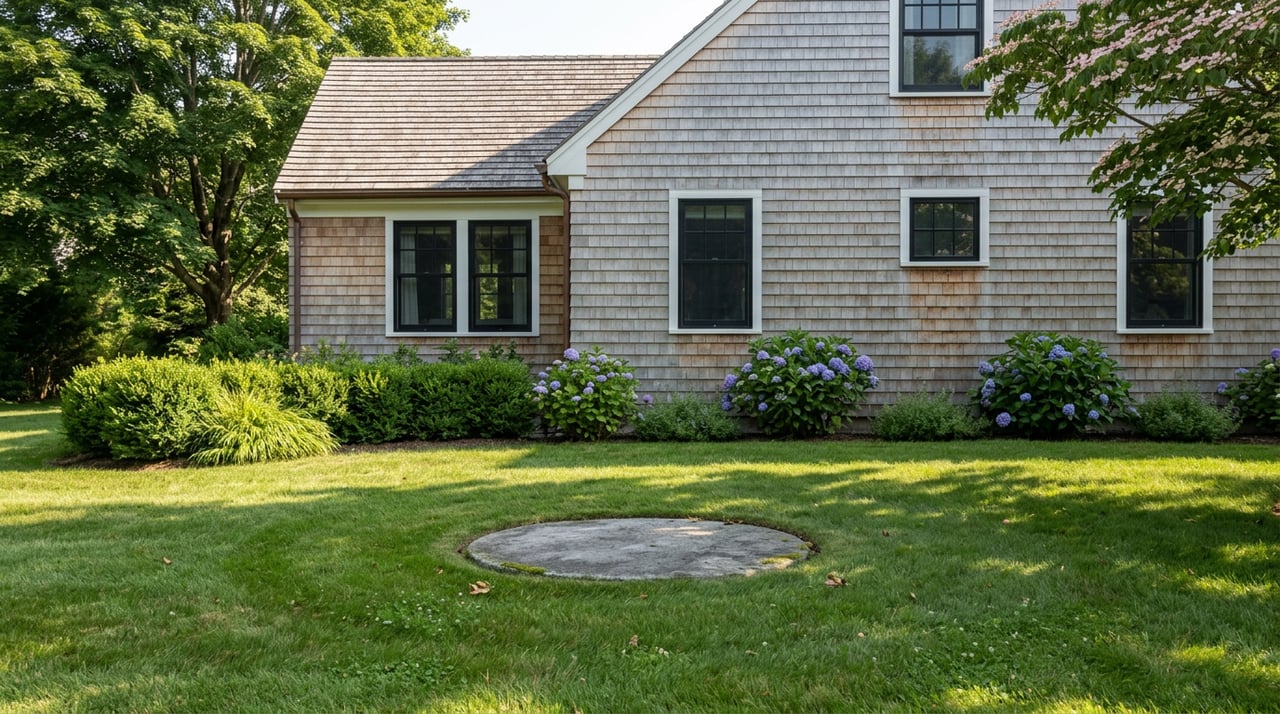
Budget roughly $400 for a comprehensive panel, though a basic bacteria and nitrate screen can run less. On the septic side, state health code sets a maximum depth of 12 inches below grade for tank access covers. Older systems installed before that standard was common sense often need new risers added at inspection, a repair worth pricing into negotiations rather than discovering after closing.
None of this is optional if you're financing the purchase. Schedule both the well and septic work early enough to act on the results before your inspection contingency expires. Waiting until the week before closing leaves no room to negotiate a credit or a repair if something comes back wrong.
Wilton Still Enforces Its Own Sanitary Code
Beyond the state framework, Wilton's own Sanitary Code, still on the books as Chapter 17 of the town's regulations, gives the Town Health Officer, the First Selectman, and a Town Sanitary Inspector, collectively the Town Sanitary Authority, direct oversight of septic and well construction within town limits. The code requires town approval before any septic system is covered over, and it sets a minimum 75-foot separation between a well and any point where a sewage system discharges. The penalty language is a relic of a different era, a fine of not more than $25 per violation, but the authority behind it isn't. Any recent septic installation or repair on a Wilton property should have gone through this local approval process, and asking for that paperwork is a reasonable request during due diligence, separate from anything a lender asks for.
Why the Timing Actually Matters Right Now
None of this is theoretical scheduling advice. Wilton's market has been moving fast enough that a slow well or septic diligence process becomes its own kind of risk. Homes sold in an average of 27 days on market in July 2026, according to SmartMLS data, with roughly 2.6 months of inventory on hand and sellers fetching about 109.5% of list price. The median sale price across town reached $1,345,000 in August 2026 per the same source. In a market moving that quickly, a buyer who waits until the last week of an inspection period to schedule well and septic work has effectively removed their own leverage. If a problem turns up, there isn't time left to negotiate calmly. The work has to start the same week as the general home inspection, not after it.
A Practical Sequence Before You Waive Anything
- Confirm the water source at the specific address before you write an offer. Don't assume based on the neighborhood, since Aquarion's service pockets sit inside the same zip code as private-well roads a few streets away.
- If the home is on a private well, schedule the mechanical inspection and the DPH-recommended water panel in the same week as your general home inspection, not after.
- Request the septic system's as-built diagram and the most recent pump-out record from the seller before your contingency period narrows.
- If septic risers sit deeper than 12 inches below grade, treat the needed upgrade as a negotiation item now, not a surprise later.
- If the address is on Aquarion public water, confirm the connection is active and ask whether any special water district assessments apply to the property, since that question replaces the well conversation entirely.
FAQ
Who typically pays to pump and inspect the septic tank before closing? Standard practice on most Connecticut transactions has the tank pumped as part of the septic inspection, with that pumping cost normally covered by the seller. Confirm this in writing during negotiation rather than assuming it, since it's a matter of custom rather than statute.
Is a well inspection the same as a home inspection? No. A general home inspector may flag visible concerns around a wellhead or septic area, but the mechanical inspection and water quality panel come from specialists in those systems, typically scheduled once the general inspection raises a question or as a standard part of due diligence on any private-well property.
What happens if the well test comes back with a problem? Buyers who find an issue during the contingency period typically have room to request repairs, a price credit, or a reduction in the purchase price, or to walk away from the contract if the purchase agreement allows it. That leverage depends entirely on catching the issue while the contingency clock is still running.
If you're weighing a Wilton property against something in New Canaan or Darien, the well and septic question is one of the clearest ways the towns actually differ, not just in infrastructure but in what your due diligence has to cover before you can close with confidence. Dannel Malloy works these details on both sides of Wilton's water line every week. Request a Confidential Valuation to talk through what a specific address requires before you write an offer.